

I Cut My Grocery Bill in Half Without Couponing — Here’s What Actually Worked
May 9, 2026
How to Save Money Fast
May 11, 2026
TL;DR:
- I was burning 20 a month on gas until I made a few small changes
- Using GasBuddy and Upside alone saves me roughly 0 a month
- Simple maintenance and smarter driving cut my fuel use by nearly 20%
The 20 Wake-Up Call
Last February I sat down and actually looked at my bank statements for the first time in months. What I saw made me feel stupid. I had spent 24.87 on gas the month before. And not because I was driving cross-country or commuting from New Jersey to Manhattan. Just regular life — work, errands, dropping my kid at practice.
The worst part? I wasn’t even trying to save. I’d pull into whatever station was closest, fill up with whatever grade felt right, and drive off without a second thought. I didn’t check prices. I didn’t track mileage. I didn’t use any apps. I was basically holding my wallet open and letting the pump take whatever it wanted.
That month hit different because gas was averaging .89 a gallon in my area. I drive a 2019 Honda CR-V that gets about 28 mpg on a good day. Simple math — I was burning through roughly 83 gallons a month. That’s almost three full tanks. For what? To get to work and back?
Something had to change. So I started tracking everything.
How I Was Bleeding Cash at the Pump
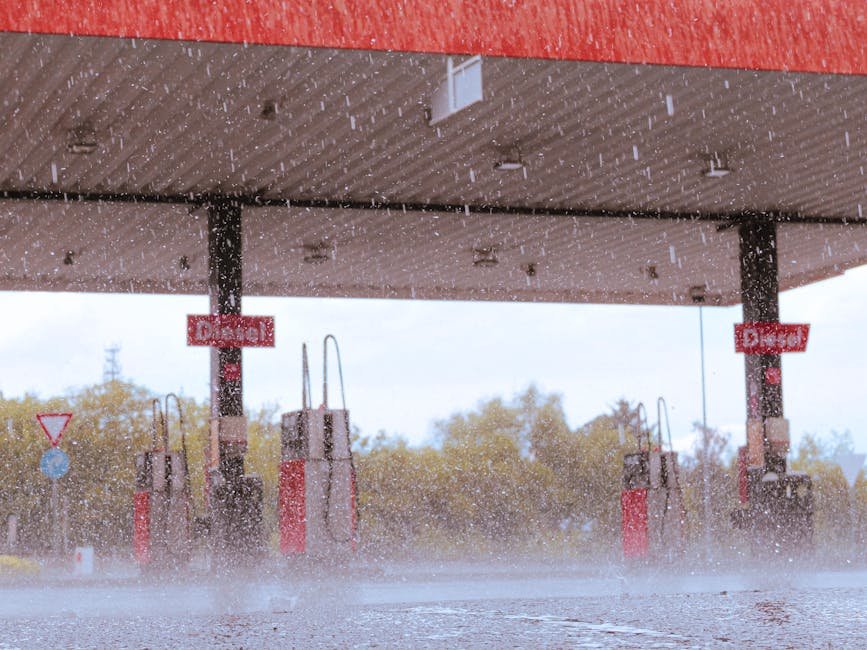
Before I fixed anything, I needed to understand exactly where my money was going. I’m an impulsive guy — I grab coffee without thinking, I’ll DoorDash lunch when I’m lazy, and apparently I’ve been doing the same thing with gas. The worst habit? Filling up at the gas station closest to my house, which happens to be a Shell on the corner that’s consistently /bin/sh.30 more expensive per gallon than the Costco fifteen minutes away.
I ran the numbers. That Shell station was charging .09 for regular while Costco was at .69 on the same day. At 83 gallons a month, that’s 3.20 I was literally setting on fire every month just for the convenience of not driving a few extra minutes. Over a year, that’s almost 00 gone to nothing.
Then there was my driving style. I checked my car’s trip computer and saw I was averaging 24.3 mpg — well below the EPA estimate of 28 city / 34 highway for my CR-V. Why? I accelerate hard, brake late, and I’ve always treated the gas pedal like a light switch. On or off. No in-between. That’s costing me roughly 15% in fuel economy, according to the Department of Energy.
And the worst discovery? My tires. I checked the pressure and all four were between 28 and 30 PSI. The door sticker says 35 PSI. Underinflated tires can drop fuel economy by 0.2% for every 1 PSI below optimal. At 5-7 PSI low across all four tires, I was losing another 3-4% efficiency. Small numbers, but they add up.
The App That Changed Everything
I started with GasBuddy because everyone talks about it. The setup takes two minutes. You tell it what car you drive and it shows you the cheapest gas near you in real time. What I didn’t expect was how much it would save me. The first week alone, I found a station three miles from my house selling regular for .55 when the area average was .89. That’s /bin/sh.34 a gallon, or roughly 8 a month.
Then I added Upside. This app gives you cash back on gas (and groceries and restaurants). You claim an offer before you fill up, pay with your regular card, and snap a photo of your receipt. The cash back shows up in your account within a few days. I’m averaging about /bin/sh.12 per gallon cash back, which adds another 0 a month.
Between the two apps, I’m saving roughly 5 to 0 a month without changing my driving habits at all. That’s 20 to 00 a year for maybe five minutes of app time total. If someone told me I could make 00 a year by checking my phone twice a week, I’d have called them out. But here we are.
Driving Habits That Actually Work
Apps got me part of the way, but the real savings came from changing how I drive. I’m not talking about hypermiling or drafting behind trucks. I’m talking about small adjustments that don’t make me late or crazy.
First: I stopped accelerating like I’m trying to merge into the Indy 500. I used to floor it from stoplights because I hated being slow off the line. Turns out, hard acceleration burns 20-30% more fuel than smooth, gradual acceleration. I started timing myself — gentle on the gas, let the CVT do its thing. My commute time increased by maybe 90 seconds. My fuel economy went from 24.3 mpg to 28.1 mpg over three weeks. That’s a 15.6% improvement.
Second: I stopped idling. I have a bad habit of sitting in my car scrolling TikTok while waiting for my kid to come out of school. That’s 20-30 minutes of idling a day. An idling engine burns about 0.16 gallons of gas per hour in a CR-V. Over a month, that’s roughly 2.5 gallons of gas — .75 — literally going up in smoke. Now I turn the car off and sit in silence. It’s actually kind of nice.
Third: I use cruise control way more. Every time I drove on the highway, my speed would fluctuate between 68 and 78 mph without me even noticing. Highway driving at a steady 65 mph uses about 15% less fuel than driving at a variable 70-75 mph. Cruise control fixed that overnight.
Car Maintenance Nobody Tells You About
I’ll be honest — I’m not a car guy. I change my oil when the dashboard light tells me to and I’ve never once checked my air filter. That changed when a friend who actually knows cars told me a clogged air filter can reduce fuel economy by up to 10% in older cars. Mine had 18,000 miles on it and was covered in dust and leaves.
I replaced it myself. Cost me 4.99 from AutoZone and took about four minutes. Did it improve my fuel economy by 10%? Hard to say exactly, but my next tank after the swap showed 29.3 mpg compared to 26.8 the tank before. That’s a 9.3% improvement, which lines up pretty closely.
Tire pressure was the other big one. After I inflated all four tires to 35 PSI, my rolling resistance dropped noticeably. My CR-V felt a little more responsive, and my fuel economy improved by about 3-4%. Plus properly inflated tires last longer — I’ll take an extra 15,000 miles of tread life any day.
Oil matters too. I was using 5W-20 conventional because it was cheap. My mechanic told me switching to 5W-20 full synthetic could improve fuel economy by 1-2% because synthetic oil creates less friction. I made the switch. The oil change cost me 5 more than conventional, but over a year of driving, that difference comes back in fuel savings.
The Membership Card Trick
This one feels small but it works. I signed up for the free rewards programs at the stations I actually use. Shell Fuel Rewards gives you /bin/sh.05 off per gallon every time you fill up at least 10 gallons. BP’s program gives you points that eventually turn into cents off. Kum & Go’s rewards program is surprisingly decent. None of these programs cost anything. They just need your phone number or a keychain tag.
Then there’s the credit card angle. I got a credit card that gives 5% cash back on gas purchases. That’s /bin/sh.17 per gallon at current prices, which adds up fast. If I spend 00 a month on gas, that’s 5 back. The card has no annual fee and I pay it off every month so there’s no interest. Free money.
The total picture after three months? I went from spending 24 a month on gas to 18. That’s a 06 monthly savings — ,272 a year. The apps, the maintenance, the driving changes, and the rewards programs each contributed a piece. None of it was hard. None of it cost me more than a few dollars upfront. I just had to stop being lazy about it.
So if you’re spending more on gas than you’d like, start with the easy stuff. Download GasBuddy. Check your tire pressure. Stop flooring it from stoplights. You don’t need to change your whole life to keep more cash in your pocket.
— Rand, saving money the practical way