

The 30-Day Rule That Saved Me $3,000 in Impulse Purchases
Apr 25, 2026
Is an Extended Warranty Ever Worth It? I Did the Math
Apr 26, 2026
What you will learn:
• Practical strategies you can use this week
• Mistakes to avoid (from someone who made them)
• Real numbers from real experiments
⭐ 4 min read
I used to be obsessed with tracking every penny. Coffee: $4.50. Parking: $12. Groceries: $67.23. I had spreadsheets, categories, sub-categories, and color-coded charts. After six months of meticulous tracking, I looked at my savings rate. It had not moved. I was saving exactly the same percentage as before I started.
The Problem With Micromanaging Money
Zero-based budgeting — giving every dollar a job — works well for some people. For me, it created a scarcity mindset. I felt restricted, which made me want to spend more. When I inevitably overspent in one category, I felt like I had failed and abandoned the whole system for weeks at a time.
There was a deeper issue too. Tracking expenses is backward-looking. It tells you what happened, but it does not change your behavior. I already knew I spent too much on takeout. Knowing the exact dollar amount did not help me stop. If anything, the guilt made me want to comfort-eat more takeout.
The Alternative: Automation + Guardrails
I switched to a completely different system. Three rules, no spreadsheets required.
Rule one: automate savings. I set up an automatic transfer of 20% of my income to a separate savings account on the first of every month. The money moves before I ever see it. I do not have to decide to save — it just happens.
Rule two: fixed costs first. Rent, utilities, insurance, subscriptions — all automated. These eat about 50% of my income. I set them up once and never think about them again.
Rule three: spend the rest guilt-free. Whatever is left after savings and fixed costs is mine to spend however I want. No categories, no tracking, no guilt. Some months I spend it all on dining out. Some months I save extra because I cooked at home. Either is fine because the 20% savings is already taken care of.

The Spreadsheet That Made Me Miserable
I spent an entire Sunday building the perfect budgeting spreadsheet. Color-coded categories, fancy charts, dropdown menus, conditional formatting. It was a work of art. I used it religiously for about ten days. Then I forgot to log one expense, and the whole thing was off. I spent another hour trying to find the mistake. By week three, I was three days behind on logging. By week four, I had abandoned it completely.
I tried again with YNAB. That lasted three months but made me feel constantly restricted. I tried Mint. That lasted a year but did not change my spending at all. I tried the envelope system (cash only). That lasted one week before I forgot my wallet and had to use a card, which defeated the whole purpose.
The common thread across every failed system: they all required ongoing effort. Every single day, I had to make decisions about my money. Every day was a chance to fail. And I failed a lot. Each failure led to guilt, which led to avoidance, which led to spending more. The systems designed to help me save were actively making my financial situation worse.
The Rolling Average Trick
Here is one technique that worked when nothing else did. Instead of tracking every expense, I track just one number: my total spending for the month. Not by category, not by merchant — just the total. I set a hard limit and check it once a week. If I am on track, great. If I am ahead of pace, I ease up on discretionary spending for the remaining weeks.
This works because it requires minimal effort (one number, once a week) and gives me the freedom to spend within the total without feeling micromanaged. I cut my monthly spending by about 15% in the first three months just from this one change. Not because I was stricter, but because I was more aware of the total without being overwhelmed by the details.
The Result
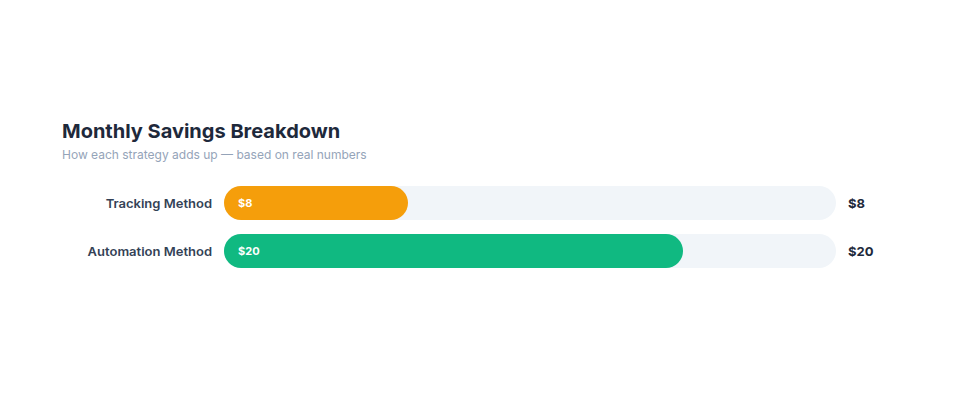
My savings rate went from 8% (with obsessive tracking) to a consistent 20% (with automation). I spend less time thinking about money and feel better about my spending. The system works because it removes decision fatigue — I do not have to make 50 small financial decisions every day. I made three big decisions once, and the system runs itself.
I wrote this based on my own experience — real numbers, real results. If it helped, consider bookmarking the site. I publish new money tips every week, no spam, no fluff.